
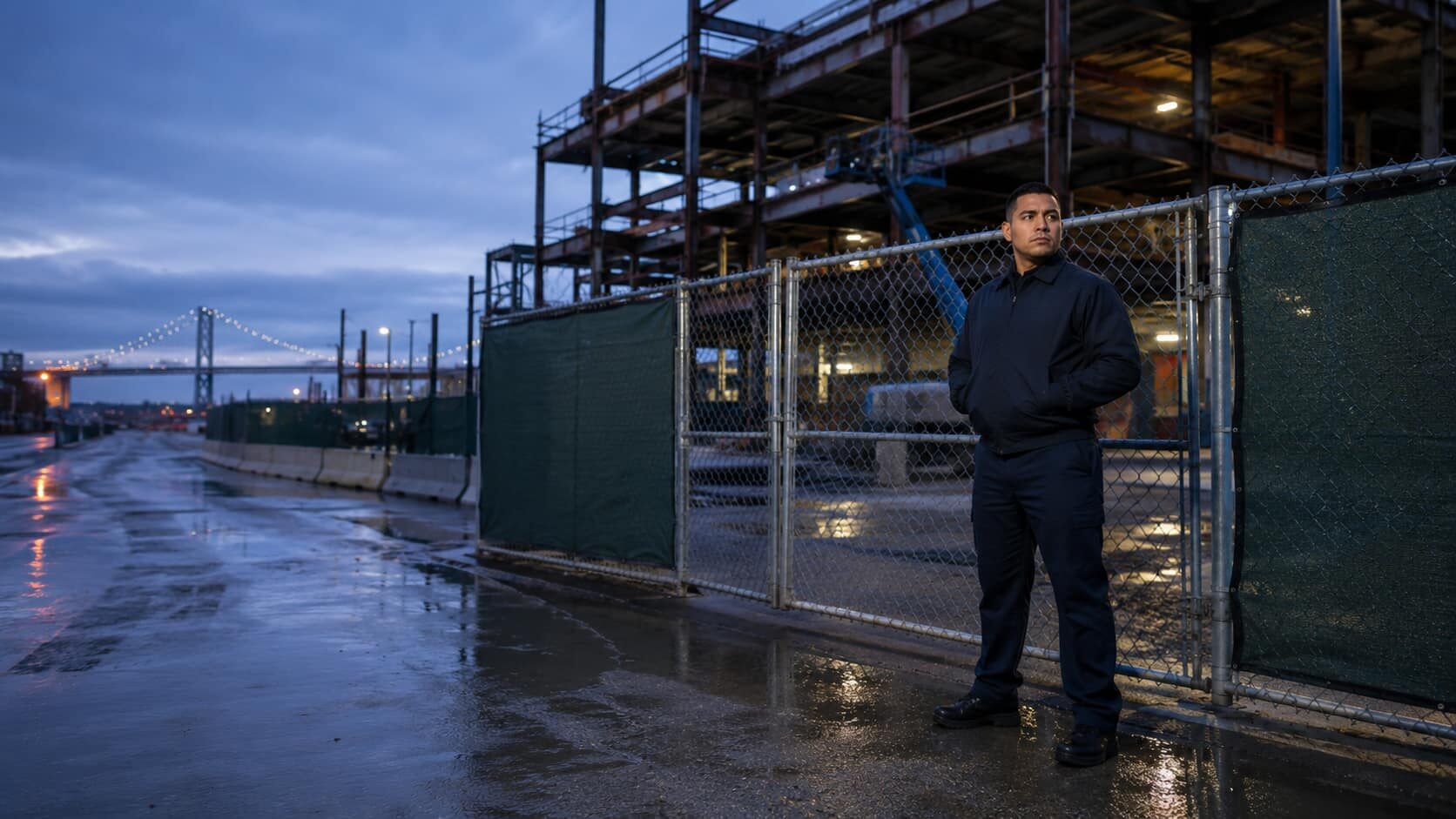
General contractors, developers, and site superintendents hire Capitol Shield Security for construction site security across Northern Virginia and suburban Maryland. We cover gates during working hours, patrol the site when it is empty, and document every pass so a loss has a paper trail rather than a guess. Call (240) 957-0356 or ask us to price coverage for your site.
A job site is the least defensible property type in commercial real estate and the one with the most portable value sitting on it. No permanent perimeter for the first several months, no working alarm system, a changing population of subcontractors, and copper, tools, fuel, and appliances arriving faster than they get installed.
It is also the property type where losses compound. A stolen generator is a line item. The two days of schedule it costs while a replacement is sourced is the real number, and on a project running against liquidated damages that number is not small.
The Two Different Jobs on a Job Site
Construction coverage splits cleanly into working hours and non-working hours, and they are different assignments requiring different instructions.
During working hours the officer is at the gate. Who is on site, which trade they belong to, whether they are badged, whether a delivery is expected, and whether the truck leaving with material is supposed to be. Gate control on an urban site adds a traffic problem: metering arrivals so trucks do not stack into a public roadway, which is an issue the site plan usually addresses on paper and reality tests every morning.
After hours the officer is on a route. Perimeter and fence line, gates and locks, material laydown areas, the fuel and equipment yard, floors that are open to the weather, and the specific locations where high-value material is staged. Interior patrols in a partially enclosed building matter more than most schedules allow for, because that is where finished copper and installed appliances sit.
Weekends and holiday shutdowns are the highest-risk windows on any project. A site that sits idle from Friday afternoon to Monday morning has given anyone watching a sixty-hour envelope, and long holiday closures extend that further.
What Actually Walks Off a Site
Copper is the perennial answer and it is still correct. Wire on reels, wire already pulled, and copper piping all have an immediate resale market and a low risk of being traced. Tools follow, particularly cordless power tools that fit in a bag, and they usually disappear during working hours rather than overnight.
Then there is the category that hurts most: appliances, fixtures, and HVAC components installed but not yet secured, and mechanical equipment on a roof. Fuel from equipment tanks is a steady drain that superintendents often write off as consumption. Catalytic converters come off site vehicles in the same way they come off any other lot.
Vandalism and squatting are the other half. An enclosed structure with no security is shelter, and a site that has been entered once tends to be entered again. Both are cheaper to prevent with presence than to remediate after.
We build post orders around what your site actually holds and where it sits, which is why the first conversation is a walk of the site rather than a price.
Security officers are not a replacement for law enforcement, fire personnel, or emergency medical services.
Coverage That Follows the Schedule
The exposure profile on a project changes month to month, and the coverage should move with it. Sitework and foundations carry equipment and fuel but little portable material. Structure and enclosure bring deliveries and staging. Rough-in is peak copper. Finishes bring appliances, fixtures, and a large trade population. Closeout brings punch crews and a building that is nearly complete and nearly unwatched.
We would rather adjust hours across those phases than sell a flat overnight post for eighteen months. On many projects the right shape is a gate post during the trade day through the busy phases, patrol coverage overnight, and heavier coverage across long weekends and shutdowns.
Where a site is small, or where several of your projects sit within a few miles, mobile patrol services often cover it better than a dedicated post. Randomized stops across a night beat a stationary officer in a trailer on a site whose real problem is a fence line.
Fire Watch During Construction and Fit-Out
Construction is one of the most common triggers for a fire watch, because the work itself is what takes systems down. A sprinkler main drained for a tie-in, devices cut out of a zone for a fit-out, a panel replaced, or a building in commissioning with protection not yet accepted all put the building on a clock.
Hot work is the other trigger. Cutting, welding, and grinding carry permit conditions, and the required watch period after work stops is the part most often skipped when a crew is trying to leave. An officer who knows the permit hours and stays with the area is doing exactly what the permit says.
We staff fire watch security on active sites and on occupied buildings undergoing renovation, and we can run it alongside the existing gate or patrol coverage rather than as a separate mobilization.
Working With the Superintendent, Not Around Them
The officer works to your site rules, not ours. That means the badging system you already use, the sign-in sheet the owner requires, the delivery window the neighbors negotiated, and the escalation contact who actually answers at three in the morning.
It also means the officer knows what is normal for your project. Which trade works Saturdays. Which subcontractor stores material where. Which gate is supposed to be chained after five. That knowledge is what separates a report saying somebody was on site from a report saying somebody was on site who should not have been.
We ask for ten minutes at the weekly coordination meeting when a project will take it. It is the cheapest way to keep post orders current on a site that changes every week.
The Record an Owner Will Accept
Every pass is logged with a time and a location as it happens, with photographs of anything worth a second look and a written report closed before the officer goes off duty. GPS verification confirms the officer reached each point on the route rather than a portion of it.
On a construction project that record does specific work. It supports an insurance claim with dated evidence instead of recollection. It answers an owner asking what coverage they paid for during a month with an incident. It gives a superintendent a documented pattern when the same section of fence keeps getting cut, which is the argument for fixing the fence.
It also protects the honest case. A site that reports nothing for four months and then reports a theft has four months of records showing the coverage was real, which is a materially different conversation with an adjuster than a site with no records at all.
How We Cover an Active Job Site
- Separate post orders for working hours and non-working hours, because they are different jobs
- Gate control that includes metering truck arrivals off the public roadway
- Coverage adjusted by project phase rather than a flat post for the life of the job
- Heavier coverage across weekends and holiday shutdowns, the highest-risk windows
- Fire watch available on the same site without a separate mobilization
- Officers working to your badging, sign-in, and delivery rules rather than ours
- Timestamped, GPS-verified patrol records that hold up with an owner or an adjuster
Construction Site Coverage Questions
It depends on the phase and the site. Overnight and weekend coverage protects material and equipment when nobody is there, and that is the baseline. A daytime gate post earns its keep once the trade population is large, deliveries are constant, or the site sits on a street where arriving trucks would otherwise stack into traffic. Many projects run gate control through the busy phases and patrol-only coverage before and after them.
The officer holds a safe position, documents what is visible including photographs where it is safe to take them, and contacts the police agency with jurisdiction along with your escalation contact. Officers do not clear a partially enclosed structure alone. On a site with no lighting, no permanent egress, and open floor penetrations, that would be an unreasonable thing to ask of anybody.
Usually, yes, and it is the simpler arrangement. Construction work is one of the most common causes of a fire alarm or sprinkler impairment, so a site already carrying coverage can often add the watch to the existing assignment rather than mobilizing a separate crew. The watch runs its own defined route and interval with its own log, because that log is what the authority having jurisdiction reviews.
Related Security Services
Fire Watch Security
Code-mandated coverage when a fire alarm or sprinkler system is out of service.
ExploreMobile Patrol and Alarm Response
Marked-vehicle patrol routes and after-hours alarm response across multiple sites.
ExploreWarehouse Security
Overnight patrols, dock monitoring, and documented checks for warehouse and cold storage.
ExploreConstruction Site Security Across the DC Metro Area
We provide construction site security throughout the Washington DC Metro Area. Explore coverage by city.
Tysons
Construction Sites security and full guard coverage in Tysons.
View locationArlington
Construction Sites security and full guard coverage in Arlington.
View locationAlexandria
Construction Sites security and full guard coverage in Alexandria.
View locationGreenbelt
Construction Sites security and full guard coverage in Greenbelt.
View locationRockville
Construction Sites security and full guard coverage in Rockville.
View locationSilver Spring
Construction Sites security and full guard coverage in Silver Spring.
View locationWe are hiring licensed security guards across the DC metro area for armed, unarmed, and fire watch posts.
Request Coverage for Your Job Site
Tell us about your property and a dedicated security coordinator will recommend the right coverage.